Showing posts with label Local. Show all posts

10.27.2009

"Church service" of a different sort

When I think "church service," I think of the hour on Sunday morning where a bunch of people dress up and gather together to sing, pray, and listen to a sermon before going out to eat for lunch. Church service.

Really, though, what service is being done? Who is being served?

Last weekend, at my church, there were no services, as we think of them, anyway. No sermon, no congregating in a sanctuary, no dressing up.

But service? There was plenty of that.

This weekend was the second annual Weekend of Service, when the church closes its doors and, instead of sitting and singing and doing the typical church-service thing, thousands of church members went out and did service. You know, actually served.

What did they do?

Ran a half-marathon to raise money to battle AIDS

Put together meals for hungry families

Beautified a downtown school's garden

Collected food in local neighborhoods

Sorted clothes to be given to needy families

Painted. Built. Sorted. Organized. Fed. Clothed. Healed. Helped.

What did I do?

Last year, we went with an organization called Rebuilding the Wall and helped demolish parts of a house so it could be rebuilt for a needy family. I discovered that, although Josh does love swinging a sledgehammer, demolition isn't one of my spiritual gifts. This year I wanted to work on something I felt I could use what I'm good at a little more.

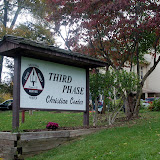
We ended up at Third Phase- a women's shelter, food pantry and thrift store. It's the biggest food pantry in our county, and the only emergency shelter. There were lots of volunteers there on Saturday- some to do yardwork, some to sort donations, some to organize the food pantry, some to revamp the thrift store- all sorts of things. We were there to do a very specific task- test electronics that had been donated to the thrift store, to see if they worked and if they could be sold. There were 4 of us testing electronics, and a couple others cleaning the dust and grime off of them. Third Phase has an entire basement room stacked floor-to-ceiling with these donations, so I felt what we were doing was definitely helping out. I chose to start testing microwaves and household electronics, knowing that if I was short on money, these were things that would be necessities. Josh worked on testing computers, mice, keyboards, and TVs.

All through the day, I was being reminded, Do not despise the small things. What we were doing was small, but it mattered. Because we tested, cleaned, and priced the microwaves, a mom working two jobs can still get dinner cooked for her family. Because the computers were evaluated, a father out of work will be able to get his resume put together and printed. A heater I found that DIDN'T work won't be sold and set someone's house on fire. Little things, but they matter. I tend to focus on the big, systemic issues like global poverty, affordable health insurance, clean drinking water... and I forget that the little things that are easier to accomplish do make a difference.

Best news of the week so far? All those small things added up. Everyone who participated in the Weekend of Service brought food for the food pantry, and many projects went to nearby neighborhoods to collect food. All in all, 257,000 pounds of food were collected by the projects for Indianapolis-area food pantries. The hungry will be fed, because lots of people gave a little.
----------------------------------------------------------------------
Part of the crowd, before we left for all the projects:


Gathering at Third Phase:


Newly-organized thrift store:


All my Weekend of Service pictures:
Weekend of Service 09

10.12.2009

One Local Thanksgiving

My sister's hosting Thanksgiving this year. Again. If I ever get a chance to host, however, I want to give a 100-Mile Thanksgiving a try. For this year, I've got a list of food to bring to the family get-together, and I'm going to make sure they're as local as possible.

  • Pumpkin pie - I grew a huge pumpkin/squash thing last year, and still have puree left over in the freezer. This will be turned into a pumpkin pie. Or two.
  • Mashed potatoes- The potato crop turned out pretty well this year, and I'm excited to share it, topped with chives, also from the garden.
  • Green beans- I have these canned and ready, though I haven't gotten tapped to bring the green bean casserole just yet.
Really, this could be a 100% local meal if I got a local turkey and some local greens for a salad, and opened a can of applesauce or pears that I've put up for the winter. Eating local is not as hard as it seems!

8.09.2009

No-Spend Month Day 9: What is "free"?

The definition of free, in the context of cost, is "complimentary: costing nothing; exempt [from paying]: grant relief or an exemption from a rule or requirement to [pay]"

What I'm learning is, "Buy one, get one free" isn't actually free. I have to spend money- buy one- to get the deal. Technically, it's "50% off when you buy 2," but that phrase doesn't go over as well with ad viewers. "Free after mail-in rebate" isn't actually free, either- I have to pay for the item, and my money will be refunded later. While I see lots of great deals out there this month- as I always do, reading fantastic posts by bloggers that keep us lazy deal-hunters informed- I can't chase any of them. Unless they're actually free.

So what have I found that's Actually Free?

  • Tickets to the US Senior Open from my company
  • Tickets to see Sandi Patty and the Indianapolis Symphony Orchestra this coming Tuesday, won from @IndyStateFair
  • Dryer balls won from Inexpensively
  • Coupons for free items like Tropicana orange juice and candy and Kroger tomatoes
  • Community events
  • Walks in the neighborhood, playing board games at home, re-watching old movies
  • Food from my garden
When I get anxious or bored at home, I often want to go out just to get out, to do something. Often this means wandering around a Goodwill or bookstore or the mall. The vast majority of the time I won't buy anything, but the fact that my entertainment circulates around retail outlets is somewhat disconcerting. This month, I'm enjoying finding Actual Free things to do- and finding them in abundance!

7.16.2009

Living Inexpensively- and Justly!

I Live InexpensivelyMy friend Heather has been working behind the scenes for months, and just last week finally launched Inexpensively, a site sharing deals and coupons locally and nationally. I especially like the local aspect to it- bloggers from specific states are sharing deals from those states- from their neighborhood. It makes the whole, big, national site feel a little smaller when I see my hometown zoo or grocery store featured.

And- EVEN BETTER- the site isn't just about saving money for your own family. When Heather started her previous site, FeedIndy.com, it was originally purposed to help people find deals so they can share with food pantries while still staying on-budget. Inexpensively has continued that same idea, and has an area labelled "Sharing" that will motivate readers to share with those in need. I love the concept, as I've written about before. It doesn't have to be an expensive undertaking, to help others.

Oh, and I should mention, I'm guest posting at Inexpensively today, and hope to in the future, in the Sharing category. Today we're talking about saving money on school supplies, to fill backpacks for kids that wouldn't otherwise have the tools to learn. I'm excited to fill a backpack for a middle schooler and a high schooler- so far I'm about half-done with the school supply lists and have spent about 80 cents, total, on supplies. Helping the less fortunate is affordable, and worth it. Check it out!

7.07.2009

Eating seasonally out of season

I've mentioned before the cost associated with eating foods out of season- a watermelon in the winter is shipped from a different hemisphere, vastly increasing the carbon footprint of that snack. So what are we to do when nothing is growing? Eat dried leaves? Not at all!

I made a local, seasonal pumpkin pie this weekend that got rave reviews- and I'm nowhere near any pumpkins ready to harvest. How is this possible? Last year, when I did harvest a pumpkin, I cut it up, roasted it, pureed it, and stuck it in my freezer. The pumpkin puree was grown locally (my backyard!) and frozen in time (literally). When I thawed it out, it hadn't traveled anywhere, though there was energy expended to keep it usable all this time (the electricity the freezer used).

Eating foods out of season always requires some kind of energy expenditure- whether it is flying tomatoes in from China or running a freezer or boiling a pot of water. My favorite way to preserve food is to can it- I like the convenience and the consistency from a jar. Freezing is way easier than canning, though, and is better for some foods. Dehydrating is a preservation strategy I haven't tried, but many people enjoy.

Mostly, I like that my garden produce can stretch across the year, and I can  grow enough to feed my family for months after the garden has stopped producing. It would be awesome to reach a point where all of our vegetables for the year are grown and preserved on our property, but we're not there- yet. Last year, I got from summer through the winter  without buying potatoes or green beans- our most-used vegetables. This year, we'll see if I can make it even further.

Do you grow your own food or buy it locally? What do you do to preserve the harvest?

6.01.2009

Slow Children

Slow Children at Play by Cecilia Woloch

All the quick children have gone inside, called
by their mothers to hurry-up-wash-your-hands
honey-dinner's-getting-cold, just-wait-till-your-father-gets-home--
and only the slow children out on the lawns, marking off
paths between fireflies, making soft little sounds with their mouths, ohs
that glow and go out and glow. And their slow mothers flickering,
pale in the dusk, watching them turn in the gentle air, watching them
twirling, their arms spread wide, thinking, These are my children, thinking,
Where is their dinner? Where has their father gone?

I came across this poem a few weeks ago and it got me thinking. Maybe we need slow children and slow mothers and a slower lifestyle, for the sake of our community.

5.11.2009

Meeting our food

Lately, a lot of lip service has been paid to "knowing where our food comes from". Some of this trend stems from the food recalls on green beans, spinach, peppers, tomatoes, peanut butter, and seemingly everything in between. In theory, if we know where our food comes from- whether it's down the street or across the country- we're safer.

While that point is arguable, I think it is important to know where our food comes from for a different reason. The closer I am acquainted with my food, the more I will appreciate it. The closer I am acquainted with my food, the higher the chance I'm eating food from whole ingredients rather than processed ones. I'm more acquainted, for example, with the Alfredo sauce I'm going to make tonight for dinner from scratch than the powdered mix that comes in the Hamburger Helper box. Although many health-conscious people would be appalled at the butter and cream on my pasta, I'm more comfortable it because I know what's in it: butter, cream, and Parmesan. That's it. What's in Hamburger Helper? No idea. Are there chemicals, preservatives, and unpronounceable additives for color and flavor that I'd rather not ingest? Without a doubt. The further I am removed from my food, the less I know about it, and the higher the probability that it contains something undesirable.

The most closely I can become acquainted with my food is by growing it myself. In this way, I can not only know where it comes from, I can control what goes into it- and can make sure it is pesticide- and herbicide-free. In my mind, gardening organically in my backyard is WAY more enjoyable and less expensive than looking for those same products marked Organic in the grocery store.

The next best thing to getting growing my own is actually knowing who did grow my food. By shopping at farmers markets or sharing produce with friends, I can meet the grower and be assured the food is safe. This weekend, I had a whole new experience with "getting acquainted" with my food- I looked my food in the eye!

Meet the Chickens:


These are meat chickens, just a month and a half old- still "peep"ing instead of clucking. They've had a very happy month-and-a-half though- starting in a warm safe house, then getting the chance to scratch at the ground and eat grass and bugs and just be chicken-y in general. They look pretty happy, no?

The egg chickens just a little ways away are the same age:

Note the serious size difference. There you have it- selective breeding at work! The full-grown egg-laying ladies are a year old and gorgeous, wandering around on their own because they know how to find their way back to the coop at night.


Back to those meat chickens.

I was there on Saturday, "Harvesting Day." I started out on babysitting duty, and ended up on "tear the guts out of the chickens" duty. Awesome, huh?

I'll spare the gory details, but do want to highlight this cool invention, the Chicken Plucker:

Our friend's dad built the contraption off of plans he found on a blog (can't find the link right now.) The drum with the rubber fingers spins around and beats the dead chicken until most all the feathers come off. By all of the guys' accounts who did the chicken processing last year, plucking by hand was the absolute worst part. This device made the whole process go MUCH quicker. Unfortunately, my part of the assembly line was still a very manual, very slimy process.

So, I came face-to-face with my food. Will I think differently about it now? I think I'm just glad to know that the chickens sacrificed for our meals were very happy, very healthy chickens that, as Joe Salatin would say, "only had one bad day" in their short life. I think more when I eat meat, knowing it had to come from somewhere. As my friend said, "Every carnivore should experience this once." McNuggets are too far removed from Real Food for me to remember where they start.

Becoming acquainted with our food matters.

5.04.2009

Buy Handmade

Buying fair trade items isn't always easy. When products come from the other side of the world, it's hard to trust whether the artisan or factory worker was paid a living wage to make the item. And, the particular item I'm looking for may or may not be offered as fair-trade. What am I to do?


A closer-to-home alternative is buying handmade, via Etsy or local craft fairs. By buying from artisans who are setting their own price, they are getting paid what they view as "fair" and you are getting a quality, one-of-a-kind product. Lately, I've been in the market for a specific gift, and I'm astounded by what's out there. I can get something much more beautiful, unique and special than anything I could find at the mall, for about the same price. I know, when I buy handmade, that I'm supporting someone who is talented and is passionate about what they do, rather than a corporate structure and mass-production.

2.13.2009

Loving My Neighbor

Too often, I'm too disconnected from the stuff that I buy. I don't think about the materials that go into it, the people along the way that harvested, shaped, or created those materials, or the time put into the object. I just know I need this doohickey, and know that the price is right.

What if I did pay attention to where my stuff comes from? What if I cared?

Some stuff comes from down the street, maybe from the farmer's market, made or harvested by neighbors or members of my community. They charge a price that they think is fair for the stuff they sell. That's cool. I'll buy it because I know where it comes from, know how it was made, and know who made it. I want to support my neighbors. It's easy.

Then there's stuff at the store. Stuff marked "Made in China." I don't know who made it. I don't know where they live. I don't know if the price being charged will pay those people a wage they can live on. I don't know if the stuff was made with safe materials or in safe working conditions or is safe for the environment. But the people who made this stuff? They are still my neighbors.

What to do about this dilemma? How can I love my neighbor with my wallet? Locally, it's easy. I know them, I know what they need, I know what they're selling and how it's made. For the stuff I want to buy, but my "neighbors" far away made it, it's harder. Here's some tips I've found:

  • Buy Local - If I source items locally, it's more likely I'll know where they came from, how they were made, and whether the conditions were safe and environmentally friendly. Also, the items didn't need to be transported as far, saving on gas.
  • Buy Fair Trade - "Fair Trade" is the name given to companies and organization who promise to pay the makers of their products a fair, living wage for their area. Fair Trade products are often also made in a sustainable way, taking into account social and environmental impacts. By buying certified fair trade items, I can support my neighbor by supporting businesses that pay my neighbor enough to live on, and take care of my neighbor's environment and working conditions. See the kitchn's Fair Trade Valentine's tips 
  • Buy Used - If I can't find the item certified fair trade, can I find it used? By buying used, I am keeping items out of landfills and avoiding sending my money to corporations who don't pay their workers fairly. Someone's already bought it once, new, so there's no reason a still-usable item should go to waste.
  • Buy Sustainable - Given the choice between wood and plastic, choose wood, the renewable resource. Given the choice between wood and bamboo, spring for the bamboo- which renews even faster than the wood. If I buy more sustainable or organic products, I am loving ALL my neighbors by keeping fumes from the air and chemicals from the earth.
  • Buy from responsible employers. This goes along, sort-of, with the Fair Trade point. Not only should the makers of the products be paid a fair wage, the employees of the retailers should be paid a living wage as well. I choose to shop at retailers who are known for treating their employees- my neighbors- well, and avoid those who don't.
How can I afford this? Well, to be honest, I don't. I'm taking baby steps. I buy used items as often as it practical. I buy local, organic food as often as I can. Fair trade isn't available in as many products, but I was super excited to get a fair-trade purse (made by World of Good ) for Christmas and a fair-trade wallet (made by Maya Traditions ) for my birthday. I prefer bamboo kitchen utensils. I avoid buying plastic toys. Little things, added up, will result in a whole-lifestyle change.
Baby steps. 
Inching toward loving my neighbor better.

1.29.2009

Alternative Accomodations

We're taking the vacation of a lifetime in a month, and it's not cheap. Most of our vacations involve road trips and stopping to see sights along the way- typically drive-able day trips. Thanks to a cousin's destination wedding in Hawaii, however, we're taking the plunge and actually flying somewhere. I used to live in Hawaii, but can you believe my husband's never even been on a plane? This should be interesting.

We started by checking the typical travel sites for hotel deals... but everything was astronomical to us Midwesterners. Around here, a nice hotel is $100 a night, and everything we were finding in Hawaii was way more- the hotels with the worst reviews hovered around $100 a night. Then an idea occurred to us- we would rather support small, local business than international hotel chains anyway, so why not investigate bed and breakfasts?

We find a bed and breakfast on each of the islands we'll be staying on, and are super-excited about them. Our hosts seem friendly and ready to help, and I feel better knowing I'm not getting cookie-cutter treatment, but I'm staying in a more personalized place. Besides- I think hotel beds are gross.

Surprisingly, though bed and breakfasts are lower-volume than hotels, their prices were significantly below hotel prices, even with online or even employee-family discounts (I have connections!). As a bonus for me who grew up in Hawaii, we'll be staying away from the "touristy" areas and I'll be able to show my husband more of the local scene. From this experience, whenever we travel, near or far, we'll be looking for the local, "grassroots" accommodations, for both cost savings and better service!

1.26.2009

Saving Stuff From Landfills AND Saving Money

When looking for a good deal on a large-ish purchase, what's the best way to go about it?

Sure, sales flyers are useful and can contain deals, but when shopping at the big retailers, our dollars go to who-knows-where, in support of mass-production, and waste. What are the alternatives?

Find it free
Freecycle  is a website with local groups that offer things- almost anything- for free. Subscribing to one of these groups or checking their website periodically can help you score everything from clothes to appliances for just the cost of driving to pick it up. The benefits of Freecycle are many:

  • Items are sourced locally, so transporting them a shorter distance saves gas. Items at retailers have often been shipped from overseas.
  • Items are FREE, obviously saving money.
  • Items are saved from landfills by finding a new home for a still-useful object.
  • Freecycle encourages sharing and decluttering, simplifying our homes and connecting us to the community
I've had good luck getting stuff off Freecycle- not necessarily stuff I'm looking for Right Now, but instead things I have an ongoing need for. I have a feeling this will be true when we have kids too- kids clothing & toys & supplies are some of the most common Offers on Freecycle.
Find it local
Freecycle is always free and local, but is often the luck of the draw as to whether the thing you need is available when you need it. The next-best option, in my book, is Craigslist. Like Freecycle, people post stuff they're getting rid of, but it's much easier to navigate and the stuff is for sale rather than for free. In my experience, I've been able to find what I need in a reasonable amount of time, and for a very reasonable price. I like that, like Freecycle, Craigslist allows me to give old items new homes and deal locally. Both services connect me to my community, allow me to avoid paying shipping, and don't come with the packaging and overhead that buying retail usually entails.